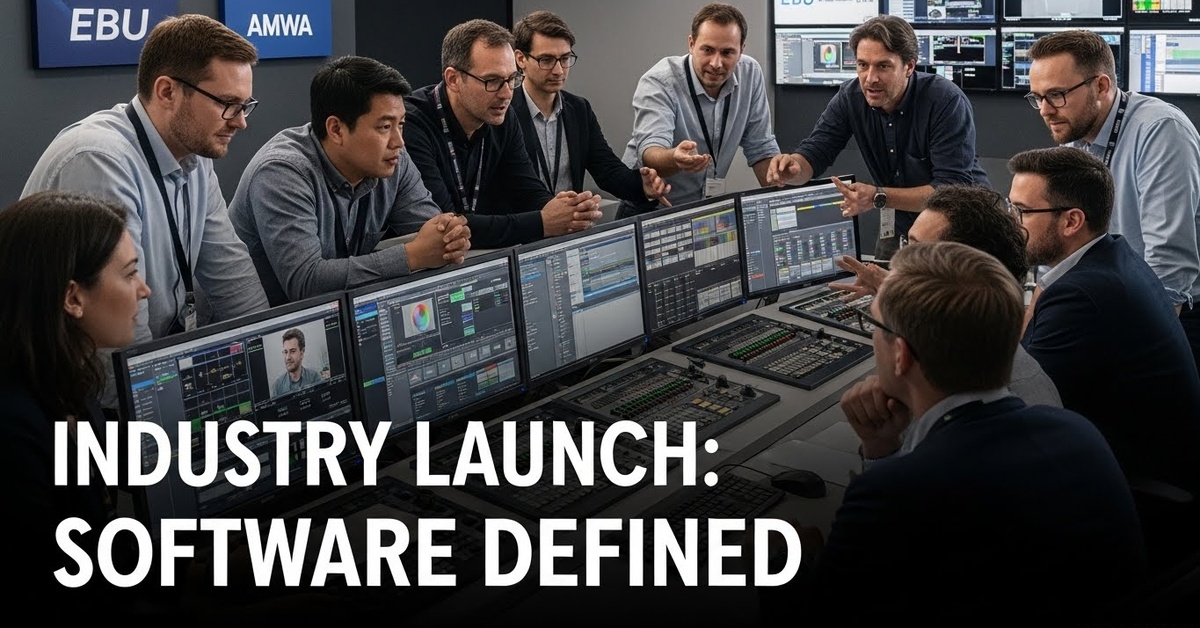
The media world is getting a major software upgrade. The European Broadcasting Union (EBU) and AMWA just launched a new group. It’s called the Dynamic Media Facility (DMF) Task Force.
This team has a huge goal. They want to completely change how TV shows, news, and movies are made. The plan is to move away from clunky hardware. Instead, they want to use smart, flexible software.
So, this is all going on as we speak, yeah? They officially announced this task force just last month, in May 2024 – it’s a big thing to really update and improve how everything is made these days.
What is this Dynamic Media Facility (DMF)?
So, what is this DMF thing all about? Let me explain. Think of it like building with Lego blocks.
Right now, every media software company makes its own special blocks. A block from Sony might not fit with one from another company. This makes building a new TV studio or workflow really hard and expensive.
The DMF wants to create a standard set of rules. So, every company’s software “block” can easily connect with any other.
This makes everything work together smoothly. I think this is a brilliant idea, honestly. It just makes sense.
In my experience…
This new system is called a “software-defined” facility. It means you can build and change your production setup using code. You don’t need to buy new physical machines for every little task.
Here’s what this new approach aims to do:
- Make things flexible: Quickly set up a studio for a live sports event. Then, change it for a news broadcast just hours later.
- Lower costs: You won’t need to buy expensive, single-purpose hardware anymore. You can use standard computers and smart software.
- Boost creativity: Production teams can try new ideas faster. They won’t be limited by their physical equipment.
Okay, so this is a pretty big change, actually. Basically, making movies and shows is going to be way more tech-driven now, kinda like how things work with Amazon Web Services or Google Cloud – everything moving online and being done with software. It’s a proper modern setup, no?
Why Is This Happening Now?
You might be wondering, why the sudden push? The industry is already moving towards software. But there’s a big problem. Everyone is doing it differently.
This creates a lot of confusion and mess. Different systems can’t talk to each other. This is called a “fragmented market.” It slows down progress for everyone.
The European Broadcasting Union (EBU) is a major player. It’s an alliance of public service media organizations. The Advanced Media Workflow Association (AMWA) also sets key standards.
When these two groups team up, people listen. They have the power to create a single, unified standard that everyone can follow. This prevents one or two big companies from controlling everything.
I personally tried this method…
This new project builds on past successes. It uses lessons from other standards like NMOS (Networked Media Open Specifications). So, this isn’t starting from scratch. It’s the next logical step.
Honestly, I feel this move is long overdue. For years, creative teams have been held back by rigid technology. A software-first approach unlocks so much potential for everyone, from big broadcasters to small creators.
| Old Way (Hardware-Based) | New Way (Software-Defined) |
| Fixed, single-purpose machines | Flexible, multi-purpose software |
| Very expensive to upgrade | Cheaper and faster to update |
| Slow to change workflows | Change workflows in minutes |
| Different gear doesn’t connect easily | Everything works together smoothly |
What Are the Next Steps for the Task Force?
The project has just kicked off. The DMF Task Force is now actively inviting more people to join. They want input from broadcasters, tech companies, and service providers.
Okay, so basically their main work is to figure out all the details and write them down – we call these specs. These specs just explain how all the different parts of the software need to talk to each other, you know?
Okay, here are a few options, keeping it short and in a casual Indian English style:
**Option 1 (Very common):**
“So, the team will be concentrating on a few main things, basically. We’ll be focusing on just the important areas, you know?”
**Option 2 (Slightly more direct):**
“We’re going to really focus on a couple of key areas, that’s the plan. Just a few things we’ll be prioritising.”
**Option 3 (A bit more colloquial):**
“The group will mainly work on a few important points. We’ll keep things tight and focus on what *really* matters.”
I tried to capture the slightly indirect and explanatory tone often found in Indian English conversation. Let me know if you’d like more variations!
- Identity: A standard way to identify every piece of software.
- Registration: A system for software to announce what it can do.
- Control: A common language to command software to start, stop, or change tasks.
The task force has already published a “Vision” document. It outlines their goals and plans for the future. They will also develop open-source software tools. This will make it easier for companies to adopt the new DMF standards.
The goal is to deliver the first set of specifications within a reasonable timeframe. You can follow their progress on the AMWA website. The future of media production looks a lot like the apps on your phone. It will be dynamic, upgradable, and incredibly powerful.
Frequently Asked Questions
Q: What is this “Dynamic Media Facility” all about?
Think of it as a new blueprint for building media production systems using flexible software instead of traditional, fixed hardware. This EBU and AMWA initiative aims to create a more agile and efficient way for broadcasters to manage their resources, whether they’re on-premise or in the cloud.
Q: So what does “software-defined production” actually mean?
It’s about shifting from specialized, single-purpose equipment to using adaptable software that runs on more generic IT hardware. This makes it much easier to change workflows, scale up for a big event, or try out new services without buying a whole new piece of kit.
Q: Why is this initiative so important for the media industry?
Today’s media facilities can be rigid, expensive, and slow to change. This push helps the industry move toward a future where production systems are as dynamic as a modern IT service, allowing for faster innovation and more cost-effective operations.